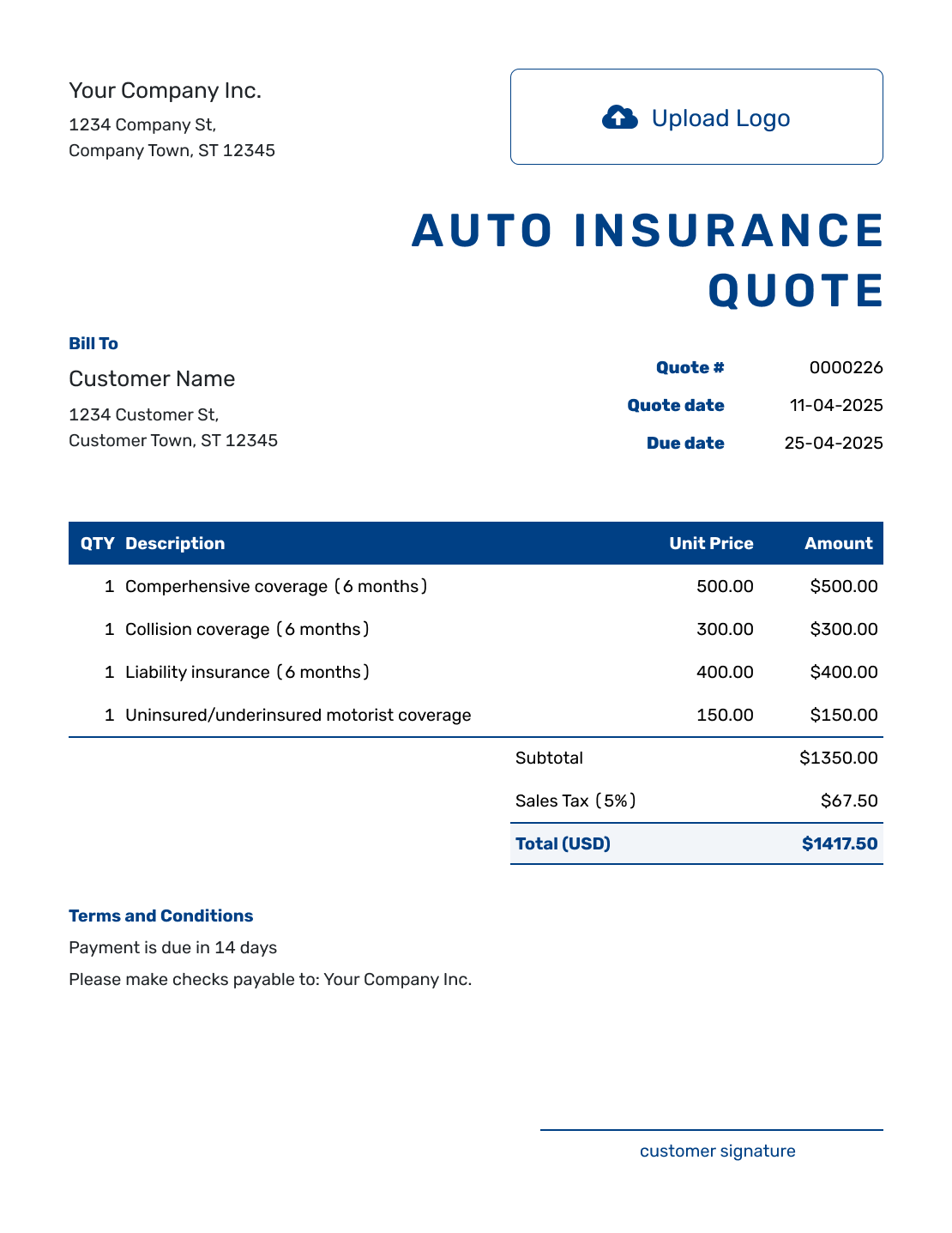
Auto insurance quotes car are estimates provided by insurers that detail the premium a driver will pay for coverage on a specific vehicle.
Understanding these quotes is crucial because they influence budgeting, risk management, and compliance with legal requirements; historically, quote aggregation has evolved from phone calls to sophisticated online platforms, making price transparency more attainable.
The following sections explore pricing dynamics, data inputs, comparison tools, common errors, discounts, policy customization, and future trends, equipping readers with a complete roadmap for securing optimal coverage.
1. Pricing Dynamics
Premiums are calculated using actuarial models that weigh risk factors against expected claims costs.
- Risk Profile
Insurers assess driver age, driving record, and mileage; a 25‑year‑old with a clean record may see a 15% lower quote than a comparable driver with recent violations, directly affecting affordability.
- Vehicle Type
Cars with advanced safety features, such as Toyota Camry equipped with collision‑avoidance, often attract lower rates because they reduce accident likelihood, translating into tangible savings.
- Geographic Location
Urban drivers in Detroit face higher premiums due to increased traffic density and theft rates, whereas rural drivers in Iowa may benefit from reduced exposure, resulting in cheaper quotes.
- Coverage Limits
Choosing higher liability limits raises the quoted premium; a policy with $100,000/$300,000 limits costs more than a $50,000/$100,000 option, reflecting greater insurer liability.
- Deductible Choice
Opting for a $1,000 deductible instead of $500 typically lowers the premium by 5‑10%, balancing out‑of‑pocket expenses against monthly costs.
2. Auto Insurance Quotes Car Data Inputs
Accurate data entry is essential for reliable quotes. Mistyped zip codes or vehicle identification numbers can inflate premiums by up to 20% because insurers misclassify risk zones or vehicle specs.
Modern quote engines pull data from motor vehicle departments, credit bureaus, and telematics devices, creating a comprehensive risk picture that improves pricing precision and reduces manual errors.
3. Comparison Tools and Platforms
Online aggregators such as NerdWallet, The Zebra, and Compare.com allow side‑by‑side evaluation of multiple quotes, highlighting differences in coverage options, discounts, and customer service ratings.
- Filter Capabilities
Users can narrow results by deductible amount, coverage type, or insurer rating; a family seeking full‑coverage for two vehicles can quickly isolate policies that meet both criteria.
- Real‑Time Updates
Dynamic pricing engines adjust quotes instantly based on market fluctuations, ensuring that the displayed premium reflects current underwriting standards.
- User Reviews
Aggregated satisfaction scores provide insight into claim handling speed; insurers with higher Net Promoter Scores often resolve claims faster, influencing selection beyond price alone.
4. Common Mistakes to Avoid
Skipping optional coverages like uninsured motorist protection can leave drivers exposed to significant out‑of‑pocket costs after an accident involving an uninsured driver.
Relying solely on the lowest quote without reviewing policy exclusions may result in denied claims for events such as windshield damage, which many insurers treat as separate endorsements.
5. Discount Opportunities
Insurers reward low‑risk behaviors with discounts; bundling home and auto policies frequently yields a 10‑15% reduction, while safe‑driver courses can shave another few percent off the quote.
Telematics programs, like Progressive’s Snapshot or Allstate’s Drivewise, monitor driving habits and grant discounts for consistent speed moderation and gentle braking, directly lowering the quoted premium.
6. Policy Customization Strategies
Tailoring coverage to individual needs prevents overpaying for unnecessary add‑ons. For example, a commuter who parks in a garage may forego comprehensive coverage for theft, focusing instead on liability and collision.
Adjusting limits annually based on life changes—such as acquiring a new vehicle or adding a teenage driver—ensures that the quote remains aligned with actual risk exposure.
7. Future Trends in Auto Insurance Quotes
Artificial intelligence and machine‑learning models are increasingly influencing quote generation, offering hyper‑personalized rates based on real‑time driving data and predictive analytics.
As autonomous vehicle technology matures, insurers will develop new rating factors that consider software reliability and sensor redundancy, reshaping the quote landscape for the next generation of drivers.
Frequently Asked Questions
Below are quick answers to common queries about obtaining and using auto insurance quotes car.
Question 1: How many factors affect an auto insurance quote?
Typically, 10‑15 variables influence a quote, including driver age, vehicle model, location, credit score, mileage, and selected coverages. Each factor contributes to the overall risk assessment used by insurers.
Question 2: Is it better to get quotes online or through an agent?
Online quotes provide speed and price comparison, while agents can offer personalized advice and help navigate complex policy language. Combining both approaches often yields the most comprehensive result.
Question 3: Can changing the deductible lower the premium?
Yes, raising the deductible reduces the insurer’s liability per claim, which usually lowers the monthly premium by 5‑10%. The trade‑off is a higher out‑of‑pocket cost when a claim occurs.
Question 4: Do credit scores impact auto insurance quotes?
Most states allow insurers to factor credit-based insurance scores into premium calculations. A higher credit score often translates into lower quotes because it signals financial responsibility.
Question 5: What is the benefit of bundling auto and home insurance?
Bundling typically grants a multi‑policy discount ranging from 10‑15%, simplifies billing, and consolidates customer service under one provider, enhancing overall convenience.
Question 6: How often should quotes be refreshed?
Refreshing quotes annually, or after major life events such as moving or purchasing a new car, ensures rates reflect current risk factors and can uncover new savings opportunities.
16 Practical Tips for Smarter Auto Insurance Quotes Car
Tip 1: Verify personal data. Ensure name, address, and vehicle identification number are entered correctly to avoid inflated premiums.
Tip 2: Compare at least three providers. Multiple quotes reveal price ranges and highlight hidden fees.
Tip 3: Use the same coverage levels. Standardize limits and deductibles across quotes for an apples‑to‑apples comparison.
Tip 4: Check discount eligibility. Review eligibility for safe‑driver, multi‑policy, and telematics discounts before finalizing.
Tip 5: Review policy exclusions. Understand what is not covered to prevent surprise claim denials.
Tip 6: Adjust coverage annually. Reassess limits after major life changes to keep premiums aligned with risk.
Tip 7: Opt for a higher deductible if affordable. A larger deductible can lower monthly costs without sacrificing essential protection.
Tip 8: Leverage credit‑based scores. Improve credit health to qualify for lower rates where permitted.
Tip 9: Consider usage‑based programs. Install telematics devices to earn discounts for safe driving habits.
Tip 10: Bundle with home or renters insurance. Multi‑policy discounts often exceed 10% of the auto premium.
Tip 11: Shop during renewal windows. Insurers frequently offer promotional rates during policy renewal periods.
Tip 12: Ask about loyalty rewards. Long‑term customers may receive rate reductions or added benefits.
Tip 13: Evaluate customer service ratings. Fast claim processing can be more valuable than a marginally lower price.
Tip 14: Use reputable aggregators. Platforms like The Zebra provide transparent, up‑to‑date quotes from multiple carriers.
Tip 15: Keep a clean driving record. Avoid tickets and accidents to maintain low‑risk status and favorable quotes.
Tip 16: Review policy annually. Regularly revisit coverage to capture new discounts and adjust for changing needs.
Conclusion
The landscape of auto insurance quotes car is shaped by a blend of personal risk factors, vehicle characteristics, and market dynamics. By mastering pricing elements, leveraging comparison tools, avoiding common pitfalls, and exploiting discounts, drivers can secure cost‑effective, comprehensive coverage.
Continued innovation in data analytics and telematics promises even more tailored pricing in the future, making proactive quote management an ongoing advantage for savvy motorists.

